


Sourat Kahf is a powerful chapter in the Holy Quran, rich with spiritual guidance and practical wisdom. Muslims around the world hold this chapter in high regard, especially because of the unique lessons embedded within its four main stories. This article explores the deeper meanings of these stories, connecting them to everyday life while also reflecting on the broader themes such as the Islamic view of angels and the concept of iblis shaitan.
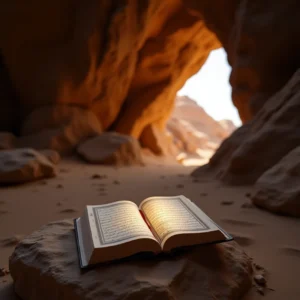
Purpose of the story of the people of the cave
The story of the people of the cave is a striking reminder of the value of faith and resilience. A group of young believers chose to withdraw from a society immersed in disbelief, seeking refuge in a cave to preserve their religion. Their sincere prayer and faith in Allah led to a miracle: they slept for centuries, untouched by time.
This narrative in sourat kahf emphasizes how divine protection accompanies unwavering belief. The story inspires Muslims today to stay strong in their faith, even when society may pressure them otherwise. It is a timeless symbol of trust in God’s will.
Meaning behind the story of the two men and the gardens
The story of the two men and their gardens in sourat kahf is a profound lesson on arrogance, gratitude, and divine justice. One man, wealthy and proud, boasted about his lush gardens, believing they would never perish. The other man, humble and God-fearing, reminded him that everything comes from Allah.
When the arrogant man’s garden was destroyed, he realized that worldly riches are fleeting. The story teaches that wealth without gratitude and faith can lead to destruction. This aligns with the broader message of sourat kahf, reminding believers to place their trust in Allah, not material possessions.
Lessons from the story of Musa and Al-Khidr
Perhaps one of the most mysterious and intriguing episodes in sourat kahf is the journey of Prophet Musa with Al-Khidr. Musa sought knowledge, but during the journey, he struggled to understand Al-Khidr’s actions, which appeared harmful but were rooted in divine wisdom.
This story beautifully captures the essence of patience and the limits of human understanding. As believers, we must accept that Allah’s plan is often beyond our comprehension. This concept connects to the Islamic view of angels—beings who obey Allah’s commands without question, reflecting perfect submission.

Wisdom in the story of Dhul-Qarnayn
The story of Dhul-Qarnayn in sourat kahf tells of a just and powerful ruler who traveled across lands to establish justice and protect people from harm. His mission to build a barrier against the corrupt tribes of Gog and Magog shows the responsibility that comes with power.
This part of sourat kahf emphasizes leadership, justice, and the significance of protecting the weak. It also subtly reminds readers of iblis shaitan—who uses corruption and deception to mislead people—contrasting Dhul-Qarnayn’s role as a force of good.
Connection between the stories in sourat kahf
Each of the four stories in sourat kahf may seem distinct, but together they weave a larger narrative about trials of faith, wealth, knowledge, and power. These stories guide Muslims on how to navigate life with the help of spiritual wisdom.
This connection also brings forward the meaning of sourat kahf in Islam. It is not just a chapter to read, but a source of insight for anyone seeking clarity and strength in their spiritual journey.
Role of patience and knowledge in sourat kahf
Throughout sourat kahf, patience and the pursuit of true knowledge stand out as recurring themes. Whether it’s the young believers in the cave, the humble man in the garden, or Prophet Musa with Al-Khidr—each story highlights the value of enduring with faith and seeking deeper understanding.
Knowledge in Islam is sacred, and it must be coupled with humility. The stories also serve as a protection from the traps of iblis shaitan, who often exploits ignorance and impatience to mislead people.
Why sourat kahf matters today
Understanding the reason Muslims read sourat kahf on Fridays is key to appreciating its spiritual depth. Prophet Muhammad (peace be upon him) encouraged reciting sourat kahf weekly, especially on Fridays, as it serves as a shield from the deception of Dajjal and strengthens one’s connection with Allah.
This weekly practice is not just ritualistic; it is a chance for reflection. As modern challenges test our faith, sourat kahf provides timeless guidance and grounding.
The meaning of sourat kahf in Islam
The meaning of sourat kahf in Islam is multifaceted. It is a chapter about hope, trust, divine wisdom, and human trials. It teaches us that behind every hardship is a lesson, and behind every delay, a divine plan.
By contemplating its stories, believers not only grow spiritually but also protect themselves from the whispers of iblis shaitan. Furthermore, just as angels obey without questioning, sourat kahf invites us to submit to Allah’s will with full trust.
Explore more with ZULFA INSTITUTE
At ZULFA INSTITUTE, we offer dedicated courses to help Muslims understand the Quran deeply and meaningfully. If you wish to explore the stories of sourat kahf and other powerful chapters, our programs provide structured and insightful learning.
Whether you’re a beginner or seeking advanced tafsir, ZULFA INSTITUTE is here to guide you in your journey of faith. For more information, contact us at 01202942383.
In conclusion, sourat kahf is not just a chapter to recite—it’s a manual for life. With its profound stories, it teaches patience, gratitude, humility, and trust. Through its reflection on iblis shaitan and the Islamic view of angels, it offers a holistic spiritual perspective that remains relevant today.
Let sourat kahf be your companion every Friday, and may its wisdom light your path throughout the week.
Frequently asked questions
1. What is the meaning of Sourat Kahf in Islam?
In Islam, sourat kahf holds deep spiritual significance. It highlights the power of faith, patience, and trust in Allah during times of trial. The stories serve as moral lessons, helping Muslims navigate life’s challenges with guidance from divine wisdom.
2. Why do Muslims read Sourat Kahf on Fridays?
Muslims read sourat kahf every Friday because the Prophet Muhammad (PBUH) recommended it. Reciting this chapter brings light to the believer, protects from the trials of the Dajjal, and refreshes spiritual insight heading into the new week.
3. What stories are mentioned in Sourat Kahf?
It contains four main stories: the People of the Cave, the man with two gardens, Musa and Al-Khidr, and Dhul-Qarnayn. Each story represents different kinds of trials — faith, wealth, knowledge, and power — offering lessons for all Muslims.
4. Who were the People of the Cave in Sourat Kahf?
The People of the Cave were young believers who fled persecution for their monotheistic faith. By Allah’s will, they slept in a cave for centuries. Their story symbolizes unwavering faith and divine protection during adversity.
5. What can we learn from the story of Musa and Al-Khidr?
The story of Musa and Al-Khidr in sourat kahf teaches that divine wisdom often lies beyond human understanding. It emphasizes humility, patience, and the limits of human knowledge, aligning with the Islamic view of angels as beings who obey divine orders without question.
6. How is the story of the two men and the gardens relevant today?
This story serves as a timeless warning against arrogance and attachment to material wealth. It reminds believers that blessings come from Allah, and pride in worldly success can lead to spiritual failure.
7. What is the link between Sourat Kahf and iblis shaitan?
While sourat kahf doesn’t narrate the full story of iblis shaitan, it indirectly references the dangers of arrogance and disobedience—traits associated with Iblis. The stories warn against following the path of Shaitan and encourage submission to Allah’s will.


