

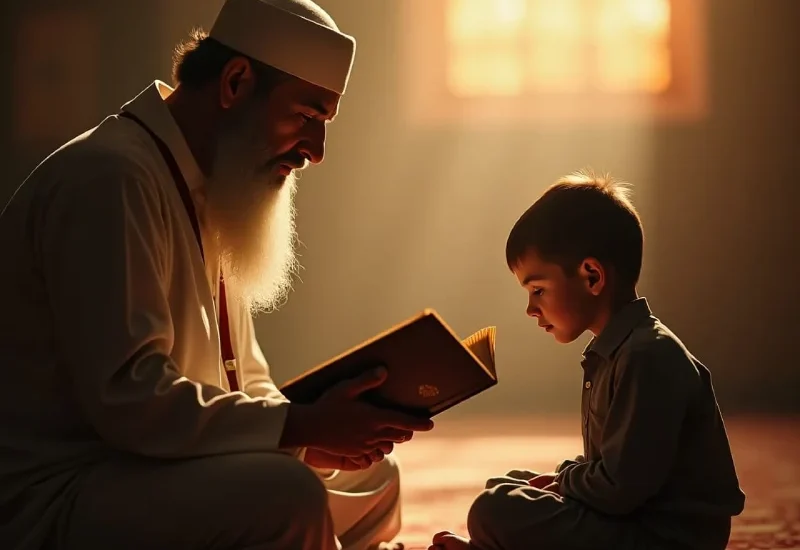
In today’s digital age, mastering the style and tone of Quranic recitation has never been more accessible. To truly honor the beauty and message of the Quran, one must learn Quran with Tajweed—a process that ensures proper pronunciation, rhythm, and spiritual presence. No matter your age or background, starting this journey can bring you closer to the words of Allah.
Whether you’re curious about learn tajweed online, a beginner needing tajweed for beginners, or someone wondering how to recite Quran correctly, this guide is made for you. Gain confidence, clarity, and a stronger spiritual connection—one rule at a time.
Step-by-Step Guide to Learning Tajweed Rules
The first step in any structured learning path is clarity. A clear system helps you progress steadily and confidently.
-
Understand Arabic letters and sounds: The foundation of all Tajweed is recognizing each letter’s proper articulation point.
-
Learn the rules: From Ikhfa to Qalqalah, clear and structured study helps you internalize each principle.
-
Practice regularly: Singled-out verses, repetition, and slow pace reinforce habits.
-
Receive feedback: Recording your recitation and comparing or reviewing with a teacher ensures accuracy.
-
Integrate with meaning: Connect recitation with understanding. Tools like sourat kahf recitation sessions allow you to pass through both Tajweed and Tafsir.
As you progress, you will notice a more heartfelt, precise, and confident tone when you learn Quran with Tajweed.
Common Tajweed Mistakes and How to Avoid Them
Even experienced reciters make errors. Awareness and correction are vital to improvement.
-
Mispronounced letters: Common among non-Arabic speakers; resolved through articulation drills.
-
Unclear elongation: Stretching certain letters too long or too short affects recitation rhythm.
-
Skipping rules under pressure: Stress or memorization pressure may lead to mistakes—but sustained practice helps avoid them.
-
Mixing meanings: When speed overtakes understanding, mistakes happen. Pairing recitation with reflection—like reflecting on sourat kahf—reinforces meaning and accuracy.
Avoiding these common errors empowers you to learn Quran with Tajweed with confidence and precision.
Learn Quran with Tajweed for Beginners
If you’re just starting, a guided path ensures success. Learning from scratch means building muscle memory and understanding from the bottom up.
-
Start with short surahs and simple tajweed rules.
-
Move gradually toward longer sections as you gain confidence.
-
Join learn tajweed online programs specifically tailored for slower progression and clarity.
-
Combine memorization with sourat kahf or salat al haja—even a small practice helps reinforce spiritual discipline and recitation habits.
Beginners often find that as they master pronunciation, their connection to the Quran grows deeper—even when reciting minimal verses.
Tools and Apps to Help You Learn Quran with Tajweed
Modern learners have many resources at their fingertips:
-
Tajweed apps with color-coded text to visually guide proper pronunciation.
-
Interactive quizzes to reinforce rule retention.
-
Audio recitations by qualified scholars help you model your own practice.
-
Online communities where you can ask questions, join recitation circles, or participate in peer feedback.
These tools help simplify what could otherwise feel overwhelming—and make learning Tajweed feel approachable and supportive.
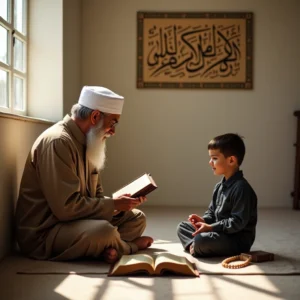
Teaching Kids the Beauty of Tajweed Early
Children learn best when engagement matches their energy. Teaching Tajweed early sets a spiritual and linguistic foundation for life.
-
Use stories and colors in teaching—associate sourat kahf stories with Tajweed rules.
-
Include gentle repetition and positive reinforcement.
-
Show them how Tajweed turns Allah’s words into living, beautiful sound—because once they hear properly recited Quran, the love for pronunciation begins naturally.
-
Even preschool children can learn a letter or short rule—later expanding into learn Quran with Tajweed as they grow older.
Starting early ensures fluency, confidence, and lasting love for recitation.
The Role of a Qualified Tajweed Teacher in Your Journey
No matter the tools or apps, personalized guidance matters immensely.
-
A true teacher crafts lessons tailored to your pace.
-
They correct subtle errors and explain underlying wisdom behind each rule.
-
They offer spiritual motivation, reminding your heart of the connection beyond mere pronunciation.
-
With a tutor, you can also explore reflections on salat al haja, sourat kahf, and other Quranic practices side by side with Tajweed.
At ZULFA INSTITUTE, our teachers blend recitation mastery with spiritual insight, helping students learn Quran with Tajweed effectively and authentically.
Why Choose to Learn Quran with Tajweed Today
Reciting correctly is more than formal—it’s transformative.
-
It honors the divine revelation in its original form.
-
It prevents distortions in meaning that may occur with rushed or incorrect pronunciation.
-
It fosters a deeper spiritual atmosphere during prayer and reflection.
-
It prepares learners for advanced study—memorization, Tafsir, and spiritual reflection.
By choosing to learn Quran with Tajweed, you commit to preserving Allah’s message in its most eloquent form.
Join ZULFA INSTITUTE’s Courses
If you’re ready to embark on this journey, consider enrolling in our curated Courses at ZULFA INSTITUTE (Contact: 01202942383). Whether you’re pursuing learn tajweed online or starting from scratch, we offer structured, supportive pathways to help you recite—or even memorize—the Quran with precision and depth.
With our expert instructors, regular feedback, and flexible scheduling, you’ll gain not only the skill but the spiritual mindset to recite consistently and confidently.
Conclusion: A Recitation That Resonates
Learning Tajweed is not about sounding good—it’s about speaking with beauty, clarity, and devotion. With every verse you recite properly, you link past generations of believers, preserve divine speech, and nourish your heart.
When you learn Quran with Tajweed, you’re choosing a path of respect, beauty, and increased spiritual presence. Start today. Let the music of proper recitation fill your prayers and your life.
Frequently asked questions
1. What is the meaning of Tajweed in the Quran?
Tajweed refers to the set of rules governing the correct pronunciation and articulation of letters when reciting the Quran. It ensures that every letter is recited from its proper origin (makhraj) with the right characteristics (sifaat), preserving the divine message as it was revealed.
2. Why is it important to learn Quran with Tajweed?
Learning Quran with Tajweed ensures that the words of Allah are recited accurately and respectfully. It enhances understanding, prevents mispronunciation, and deepens spiritual connection during recitation. It also follows the tradition of the Prophet Muhammad (PBUH), who recited the Quran with precision.
3. Is Tajweed necessary for beginners in Quran learning?
Yes, tajweed for beginners is highly recommended. It builds a strong foundation in pronunciation from the start and helps learners avoid developing bad habits. Starting with proper Tajweed also boosts confidence and fluency in reading the Quran.
4. Can I learn Tajweed online effectively?
Absolutely. Many students today prefer to learn Tajweed online due to the flexibility and accessibility of digital platforms. With qualified instructors, interactive tools, and structured lessons, online learning can be just as effective as traditional methods.
5. How can I recite the Quran correctly if I’m a non-Arabic speaker?
You can still learn how to recite Quran correctly by focusing on phonetic rules through Tajweed. Consistent practice, repetition, and guidance from a qualified teacher make it possible, even for non-Arabic speakers, to achieve excellent pronunciation and fluency.
6. What are the common mistakes learners make in Tajweed?
Common mistakes include not giving letters their full rights (like skipping ghunna or qalqalah), confusing similar sounds, and incorrect elongation (madd). Recognizing these errors early and correcting them with a teacher is crucial for proper recitation.
7. At what age should children start learning Tajweed?
Children can start learning Tajweed as early as 4 or 5 years old. At this age, they absorb sounds and pronunciation quickly. Teaching kids the beauty of Tajweed early lays a solid foundation for lifelong connection with the Quran and helps them recite confidently as they grow.


